Incremental Computation
Background
In standard stream processing, aggregate operations split streaming data into windows, store events in memory, and calculate results when the window closes. Consider this example SQL query:
SELECT avg(a) FROM stream GROUP BY tumblingWindow(ss, 10), b;In the standard execution model, rekuiper separates aggregation into three operators:
Window Operator -> Group By Operator -> Project OperatorThe Window operator accumulates stream records. The Group By operator groups records by key. The Project operator calculates final aggregate values.
This approach works for all aggregation functions, but has two limitations:
- Large windows consume high amounts of memory.
- The runtime does not use the streaming capabilities of aggregations.
For functions such as avg, the runtime does not need to wait for all window data before calculation. The runtime can update two intermediate states (sum and count) for each incoming record. When the window closes, rekuiper calculates the average as sum / count.
How Incremental Computation Works
Review the standard query plan for this SQL query:
SELECT sum(b) FROM demo GROUP BY tumblingWindow(ss, 10), c HAVING avg(a) > 0;{"op":"ProjectPlan_0","info":"Fields:[ Call:{ name:sum, args:[demo.b] } ]"}
{"op":"HavingPlan_1","info":"Condition:{ binaryExpr:{ Call:{ name:avg, args:[demo.a] } > 0 } }, "}
{"op":"AggregatePlan_2","info":"Dimension:{ demo.c }"}
{"op":"WindowPlan_3","info":"{ length:10, windowType:TUMBLING_WINDOW, limit: 0 }"}
{"op":"DataSourcePlan_4","info":"StreamName: demo, StreamFields:[ a, b, c ]"}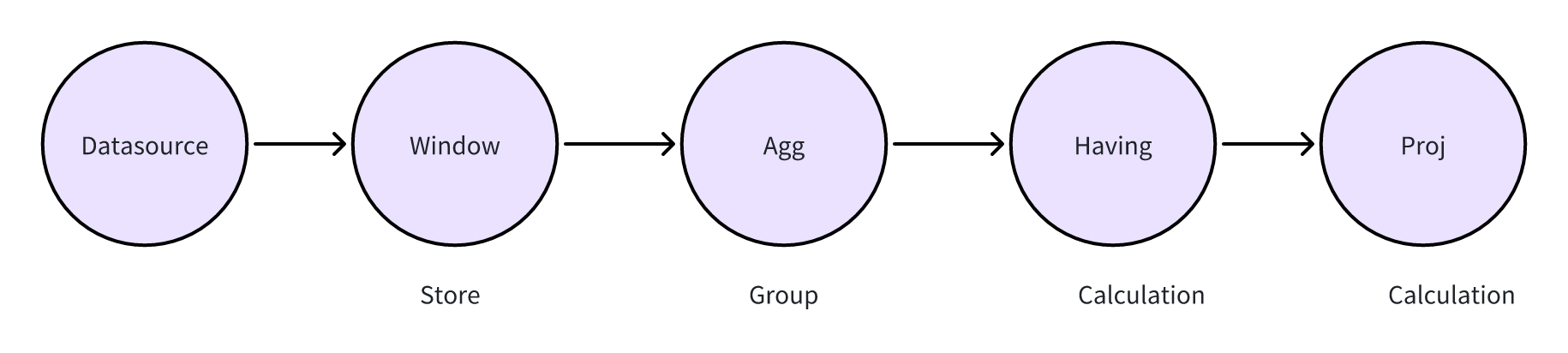
Operator Consolidation
To implement incremental computation, rekuiper combines storage, grouping, and calculation into a single operator: IncAggWindow.
As records arrive, the engine transfers them directly to IncAggWindow. Within each window, the operator classifies records by group-by keys in real time. The operator updates intermediate aggregates immediately and saves the state.
The runtime discards the original raw events. Subsequent Having and Project operators do not recalculate aggregates. They read the precalculated values directly.
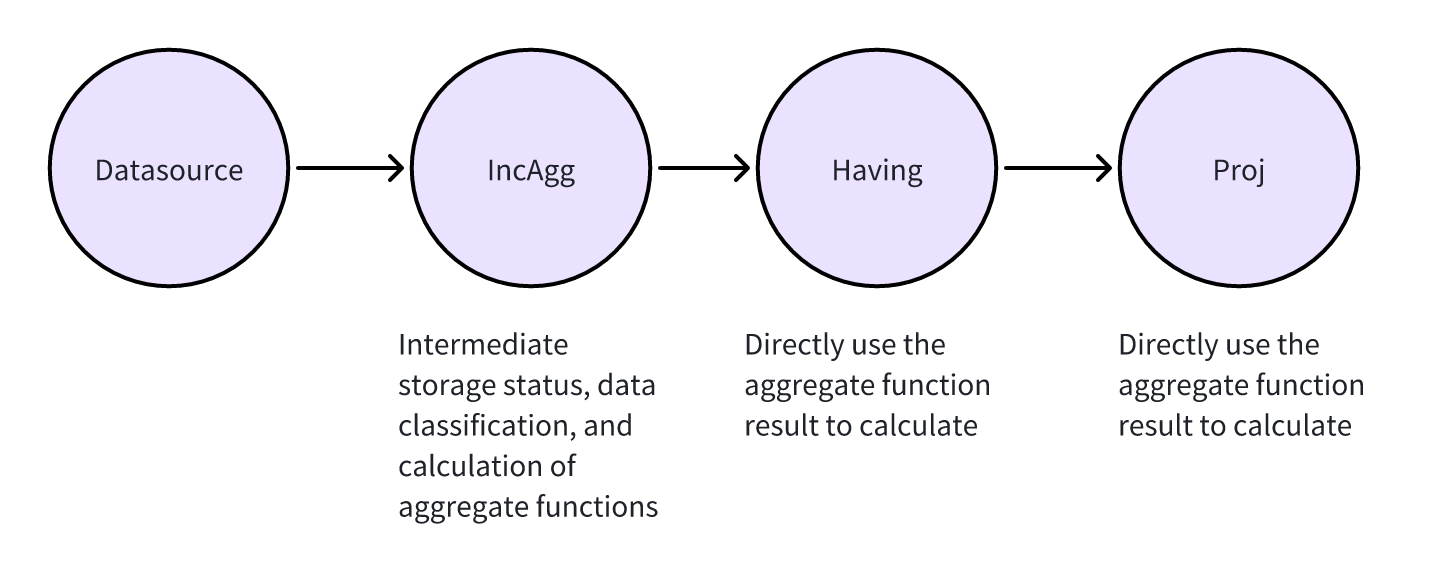
When you enable incremental computing, rekuiper generates the following optimized query plan:
{"op":"ProjectPlan_0","info":"Fields:[ Call:{ name:bypass, args:[$$default.inc_agg_col_1] } ]"}
        {"op":"HavingPlan_1","info":"Condition:{ binaryExpr:{ Call:{ name:bypass, args:[$$default.inc_agg_col_2] } > 0 } }, "}
                        {"op":"IncAggWindowPlan_2","info":"wType:TUMBLING_WINDOW, Dimension:[demo.c], funcs:[Call:{ name:inc_sum, args:[demo.b] }->inc_agg_col_1,Call:{ name:inc_avg, args:[demo.a] }->inc_agg_col_2]"} {"op":"DataSourcePlan_3","info":"StreamName: demo, StreamFields:[ a, b, c, inc_agg_col_1, inc_agg_col_2 ]"}
Enable Incremental Computation
Consider a rule that calculates an event count within a window:
{
  "id": "rule",
  "sql": "SELECT count(*) FROM demo GROUP BY countwindow(4)",
  "actions": [
    {
      "log": {}
    }
  ],
  "options": {}
}
View the query plan through the Explain API:
{"op":"ProjectPlan_0","info":"Fields:[ Call:{ name:count, args:[*] } ]"}
    {"op":"WindowPlan_1","info":"{ length:4, windowType:COUNT_WINDOW, limit: 0 }"}
            {"op":"DataSourcePlan_2","info":"StreamName: demo"}
In this plan, rekuiper buffers all events in memory until the window closes.
To enable incremental computation, set options.planOptimizeStrategy.enableIncrementalWindow to true:
{
  "id": "rule",
  "sql": "SELECT count(*) FROM demo GROUP BY countwindow(4)",
  "actions": [
    {
      "log": {}
    }
  ],
  "options": {
    "planOptimizeStrategy": {
      "enableIncrementalWindow": true
    }
  }
}
Inspect the updated query plan:
{"op":"ProjectPlan_0","info":"Fields:[ Call:{ name:bypass, args:[$$default.inc_agg_col_1] } ]"}
    {"op":"IncAggWindowPlan_1","info":"wType:COUNT_WINDOW, funcs:[Call:{ name:inc_count, args:[*] }->inc_agg_col_1]"}
            {"op":"DataSourcePlan_2","info":"StreamName: demo, StreamFields:[ inc_agg_col_1 ]"}
The planner replaces WindowPlan with IncAggWindowPlan. The operator calculates data upon arrival and eliminates event caching in memory.
Unsupported Scenarios
If an aggregate function does not support incremental calculation, rekuiper maintains standard windowing.
Consider this rule with stddev:
{
  "id": "rule",
  "sql": "SELECT count(*), stddev(a) FROM demo GROUP BY countwindow(4)",
  "actions": [
    {
      "log": {}
    }
  ],
  "options": {
    "planOptimizeStrategy": {
      "enableIncrementalWindow": true
    }
  }
}
Inspect the query plan:
{"op":"ProjectPlan_0","info":"Fields:[ Call:{ name:count, args:[*] }, Call:{ name:stddev, args:[demo.a] } ]"}
    {"op":"WindowPlan_1","info":"{ length:4, windowType:COUNT_WINDOW, limit: 0 }"}
            {"op":"DataSourcePlan_2","info":"StreamName: demo"}
Because stddev does not support incremental state updates, the engine runs the standard WindowPlan.
Memory Usage Comparison
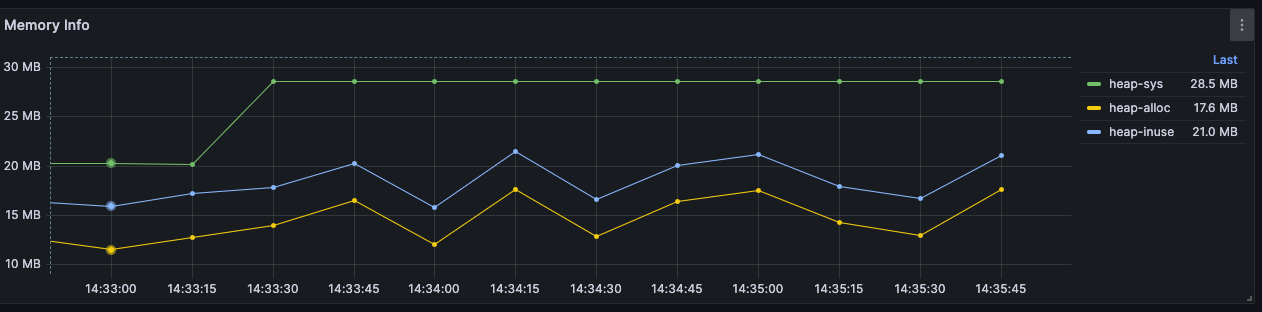
This benchmark compares memory usage under identical data loads.
Example rule configuration:
{
  "id": "rule1",
  "sql": "SELECT sum(b) FROM demo GROUP BY tumblingWindow(ss, 10) HAVING avg(a) > 0;",
  "options": {
    "planOptimizeStrategy": {
      "enableIncrementalWindow": true
    }
  },
  "actions": [
    {
      "log": {}
    }
  ]
}
Incremental Computation Disabled
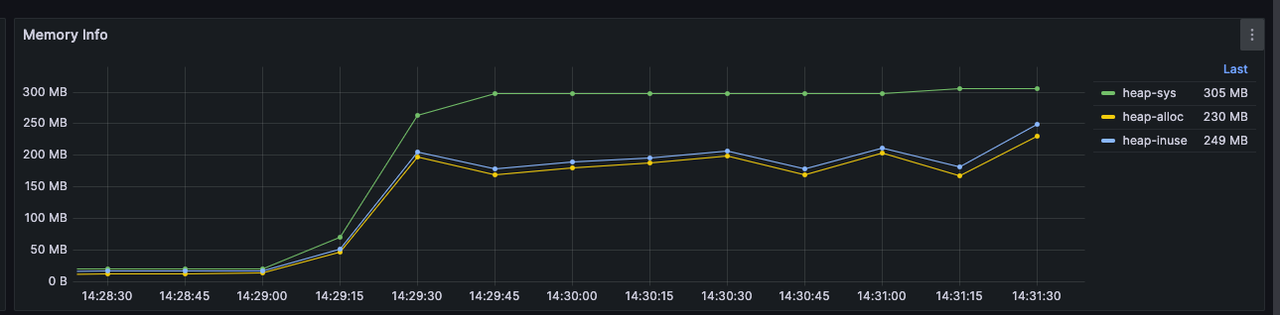
Incremental Computation Enabled